QR Code vs Barcode: What's the Difference?
What's the difference between a QR code and a barcode? Compare data capacity, scanning speed, tracking, and error correction to choose the right format.
A barcode is a one-dimensional pattern of parallel lines that stores up to 25 characters of data horizontally. A QR code (Quick Response code) is a two-dimensional grid of squares that stores up to 4,296 alphanumeric characters both horizontally and vertically, as defined by the ISO/IEC 18004:2024 specification. That single structural difference — one dimension vs. two — creates a wide gap in data capacity, scanning flexibility, error tolerance, and tracking capability.
You see both of them every day. Barcodes on cereal boxes, QR codes on restaurant tables, both on shipping labels. They look completely different, but they serve a similar purpose: encoding data in a visual pattern that a scanner can read. This guide breaks down the practical differences so you can decide which format fits your specific use case.
Key Takeaways
A barcode stores data in one dimension (~25 characters); a QR code stores data in two dimensions (up to 4,296 characters) per ISO/IEC 18004.
QR codes can be scanned by any smartphone camera from any angle; barcodes need a dedicated scanner or aligned camera.
QR codes tolerate up to 30% physical damage through Reed-Solomon error correction; barcodes have no error correction.
Dynamic QR codes track scans (time, location, count) without external systems; barcodes require separate tracking infrastructure.
GS1 barcodes are scanned over 10 billion times daily in retail; QR codes dominate consumer-facing use cases in a $13 billion market (Mordor Intelligence, 2025).
The Quick Answer
If you're looking for a fast comparison, here it is.
Feature | Barcode (1D) | QR Code (2D) |
|---|---|---|
Data format | One-dimensional (horizontal lines) | Two-dimensional (grid of squares) |
Data capacity | Up to ~25 characters | Up to 4,296 alphanumeric characters (ISO/IEC 18004) |
Data types | Numbers or short alphanumeric strings | URLs, text, contact info, Wi-Fi, and more |
Scanner required | Laser or camera scanner | Any smartphone camera |
Scan direction | Must be read horizontally | Reads from any angle |
Error correction | None | Up to 30% damage tolerance |
Tracking/analytics | Requires external systems | Built-in with dynamic QR codes |
Best for | Product inventory, retail checkout | Marketing, contactless experiences, mobile content |
Both have their place. The rest of this article explains why.
How Barcodes Work
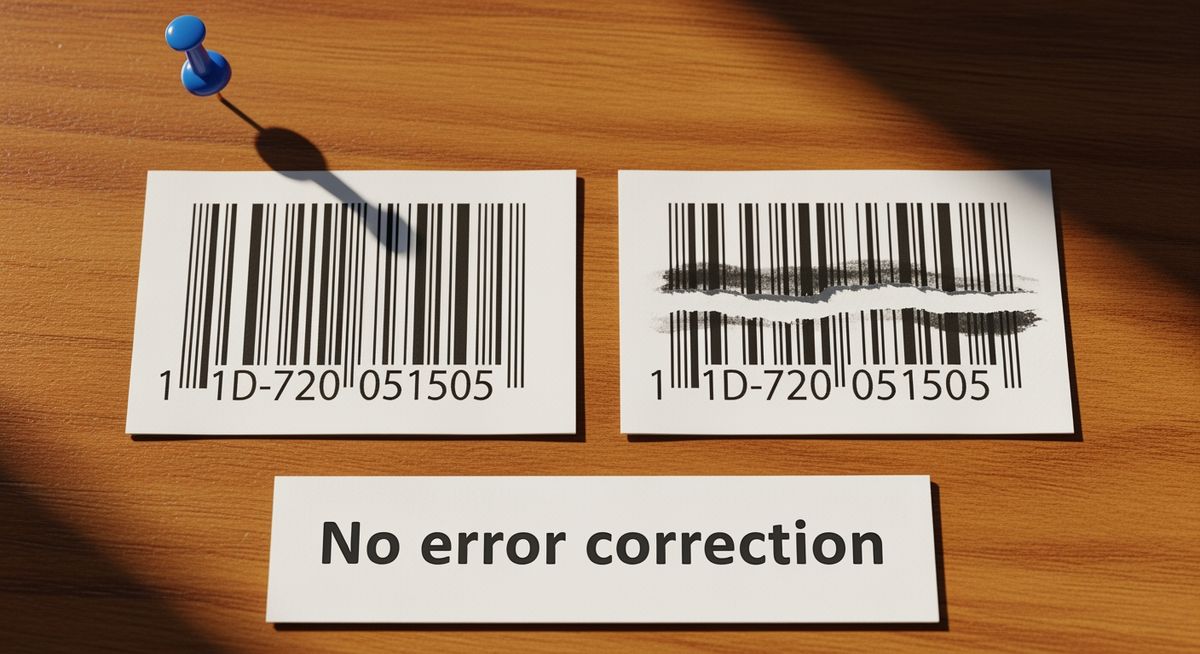
A barcode stores data in a single row of vertical lines with varying widths and spacing. A scanner reads the pattern from left to right and translates it into a number, typically a product identifier like a UPC or EAN code.
The technology is simple and proven. The first commercial barcode scan happened on June 26, 1974, when a pack of Wrigley's Juicy Fruit chewing gum was scanned at a Marsh Supermarket in Troy, Ohio (History.com). Over fifty years later, GS1 barcodes are scanned more than 10 billion times per day worldwide, according to GS1, the organization that manages global barcode standards.
Most barcodes hold between 8 and 25 characters. That's enough for a product number, but not much else. They need to be scanned in a specific orientation (the scanner has to read across the lines), and they have no built-in error correction. If part of the barcode is torn, smudged, or covered, it won't scan.
How QR Codes Work
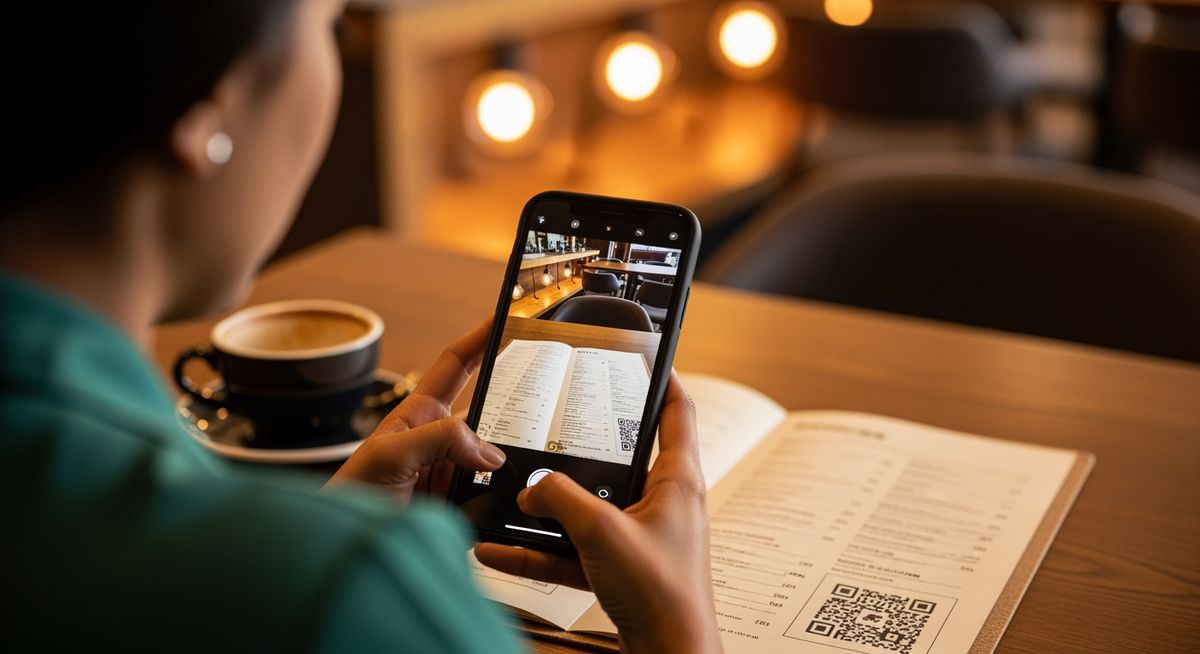
A QR code stores data across a two-dimensional grid of black and white squares called modules. Instead of reading in one direction, a QR scanner reads the entire grid at once, which is why QR stands for Quick Response.
QR codes were invented in 1994 by engineer Masahiro Hara and his team at Denso Wave, a subsidiary of Toyota Motor Corporation, to track automotive parts faster than barcodes allowed. Denso Wave chose not to exercise its patent rights, making the QR code specification freely available to anyone. That decision accelerated global adoption. The technology stayed mostly industrial until the early 2020s, when contactless menus and mobile experiences made QR codes part of everyday life.
A single QR code can hold up to 7,089 numeric characters or 4,296 alphanumeric characters, as specified in ISO/IEC 18004:2024. That's enough for a full URL, a contact card, Wi-Fi credentials, or a block of text. Any smartphone camera can scan one, from any angle, in under a second. As of 2025, nearly 2.2 billion people use QR codes worldwide, and the global QR code market is valued at $13.04 billion, growing at a 17% compound annual growth rate (Mordor Intelligence, 2025).
For a deeper look at how QR codes encode data and the difference between static and dynamic types, see our full guide: What Is a QR Code? The Complete Beginner's Guide.
QR Code vs Barcode: Key Differences
The quick-answer table above covers the basics. Here's a closer look at the differences that matter most in practice.
Data Storage Capacity
This is the most significant technical difference between a QR code and a barcode. It comes down to dimensions.
A standard barcode is one-dimensional. It stores data along a single horizontal axis. That limits capacity to roughly 20-25 characters, enough for a product number but nothing more.
A QR code is a two-dimensional barcode (sometimes called a 2D barcode). It stores data both horizontally and vertically across its grid. This gives it dramatically more capacity: up to 7,089 numeric characters or 4,296 alphanumeric characters, per the ISO/IEC 18004:2024 standard.
To put that in context, a barcode can store a product ID like "012345678901." A QR code can store that same number plus a full URL, a paragraph of text, or an entire digital contact card.
Scanning Speed and Method
Barcodes and QR codes are both fast to scan, but they differ in how scanning works and what equipment you need.
A barcode requires a laser scanner or a camera-based scanner that reads the code in a specific direction. The scanner has to be aligned with the horizontal lines. This takes a fraction of a second with proper equipment, which makes barcodes efficient for high-volume retail checkout and warehouse operations.
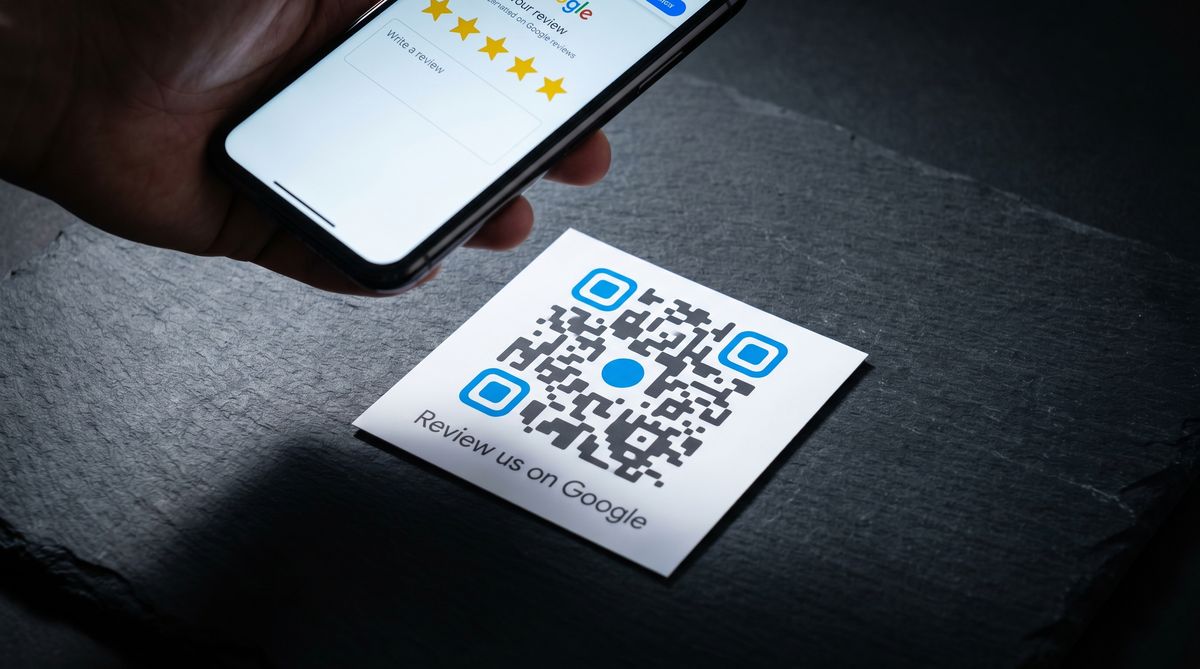
A QR code can be scanned by any smartphone camera, from any angle. The three square finder patterns in the corners of every QR code help the scanner detect orientation, so the code reads correctly whether it's tilted, rotated, or even upside down. Modern smartphone cameras decode a QR code in roughly 200-300 milliseconds from detection to result.
For everyday consumer use, QR codes have a clear advantage: the scanner is already in your pocket. No dedicated hardware needed.
Error Correction and Durability
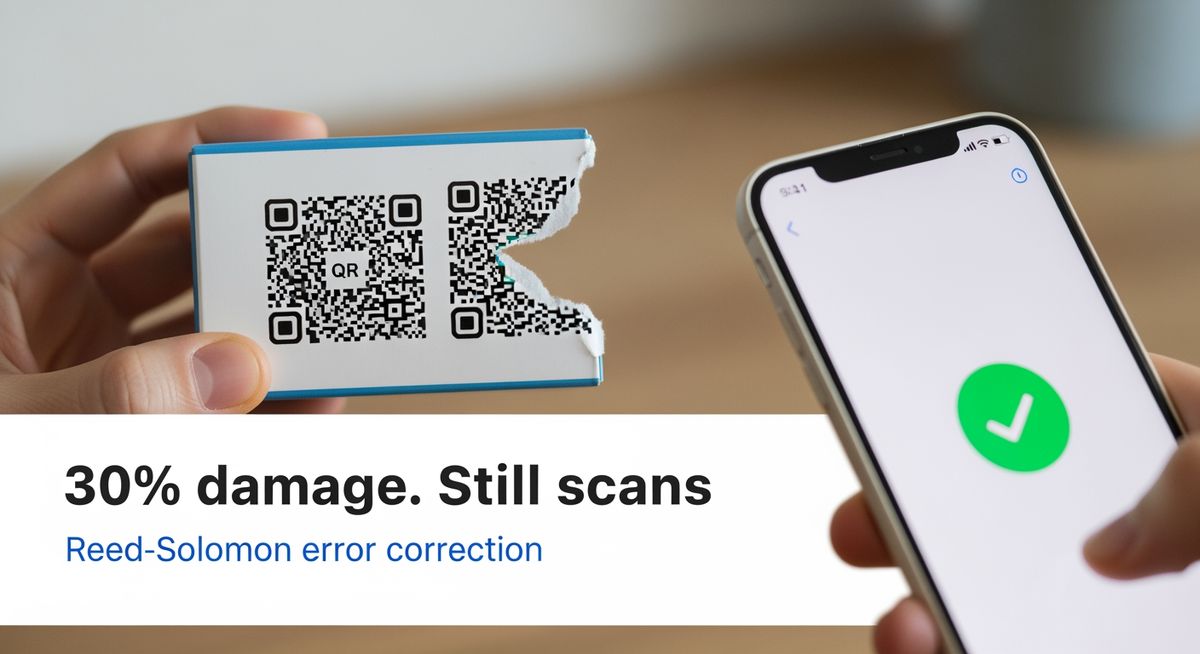
QR codes have a built-in feature that barcodes don't: error correction.
Every QR code includes redundant data using the Reed-Solomon error correction algorithm, which allows the code to remain scannable even when part of it is damaged, dirty, or obscured. The ISO/IEC 18004 standard defines four error correction levels:
Level | Recovery Capacity |
|---|---|
L (Low) | Up to 7% of data recoverable |
M (Medium) | Up to 15% of data recoverable |
Q (Quartile) | Up to 25% of data recoverable |
H (High) | Up to 30% of data recoverable |
At Level H, up to 30% of the code can be missing or unreadable and it still scans correctly. This is the reason you can place a logo in the center of a QR code without breaking it. For a full breakdown of each level and when to use it, see our guide on QR code error correction.
Barcodes have no equivalent error correction mechanism. If a section of the barcode is scratched, torn, or covered by a price sticker, the scan fails. This makes barcodes more fragile in environments where labels get handled, scuffed, or exposed to weather.
For printed materials that will be touched, folded, or posted outdoors, QR codes are the more resilient choice.
Tracking and Analytics
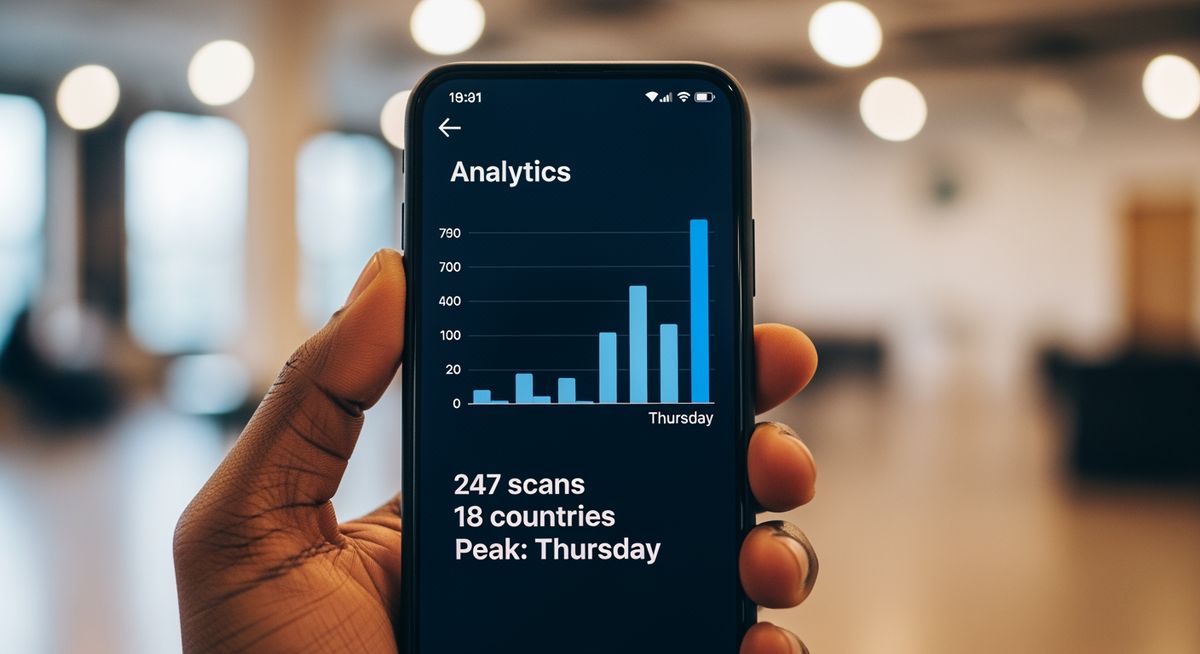
This is where the difference between barcodes and QR codes extends beyond technology into practical business value.
A barcode tells you what product was scanned. That's it. The barcode itself doesn't record when it was scanned, where, or by whom. Any tracking has to happen through an external system like a point-of-sale database or inventory management software.
A dynamic QR code can track scans on its own. Each time someone scans a dynamic QR code, the redirect URL records the scan event. Depending on the platform, you can see how many times the code was scanned, when each scan happened, and the general location of each scanner.
This makes QR codes significantly more useful for marketing, events, and any scenario where you want to measure engagement. You print a QR code on a poster, a flyer, or a product package, and you can see whether people are actually scanning it. No external tracking system required.
When to Use a Barcode vs a QR Code
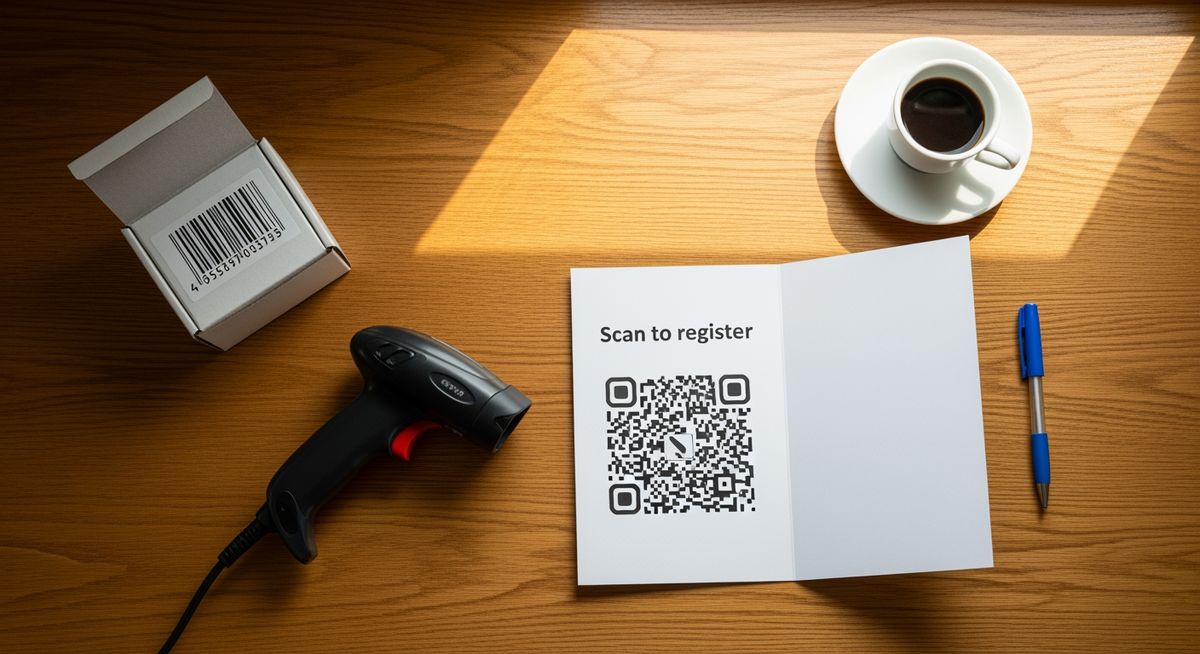
Neither one is universally better. They solve different problems.
Barcodes are better for:
Retail product identification. The entire global supply chain runs on UPC and EAN barcodes. Every product on a grocery shelf has one, and the checkout infrastructure is built around them.
High-speed warehouse scanning. Industrial barcode scanners can process hundreds of codes per minute. For inventory management at scale, barcodes are standard.
Simple numeric lookups. When all you need is a product ID or SKU, a barcode does the job with minimal complexity.
Systems that already use them. If your industry, supply chain, or point-of-sale system is built around barcodes, switching to QR codes adds cost with little benefit.
QR codes are better for:
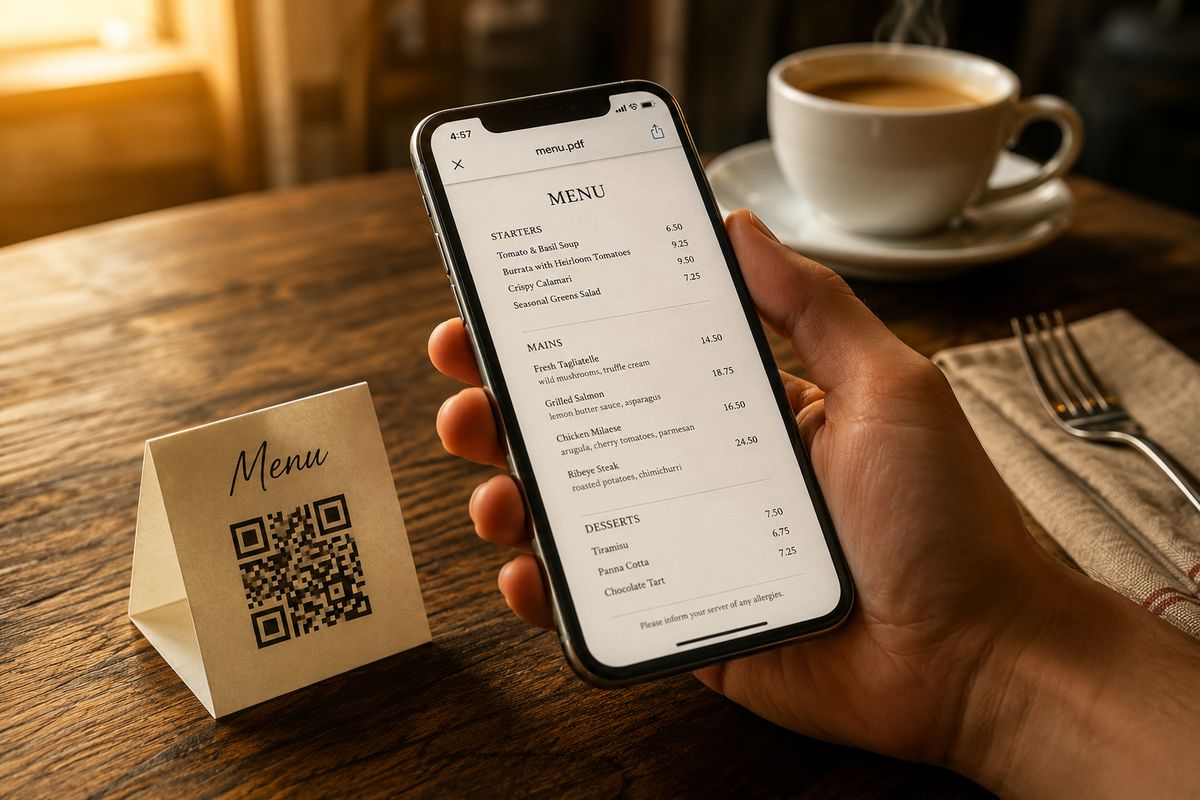
Connecting physical objects to digital content. Menus, event details, landing pages, contact cards, app downloads. If the destination is a URL or digital experience, a QR code is the natural fit.
Marketing and engagement tracking. Dynamic QR codes let you see who is scanning, when, and where, without extra infrastructure.
Content that changes. With a dynamic QR code, you can update the destination after printing. A barcode's data is permanent.
Consumer-facing interactions. Anyone with a smartphone can scan a QR code. No app or special scanner needed.
Situations where durability matters. Error correction means QR codes survive wear and damage that would break a barcode.
Platforms like FreeQR let you create dynamic QR codes that can be updated after printing, with built-in scan analytics to track engagement.
Can QR Codes Replace Barcodes?
The honest answer: no. And they don't need to.
Barcodes and QR codes serve different purposes with different strengths. The global retail and supply chain infrastructure is built on barcodes. Over 2 million companies use GS1 barcodes, which are scanned more than 10 billion times daily across the world's supply chains. Point-of-sale systems, inventory databases, and shipping logistics all depend on them. Replacing that infrastructure would be enormously expensive and unnecessary.
What is happening is that QR codes are expanding into areas where barcodes never worked well. Marketing materials, contactless menus, event check-ins, mobile payments, product authentication. These are consumer-facing, content-rich use cases that need more capacity and flexibility than a barcode can offer.
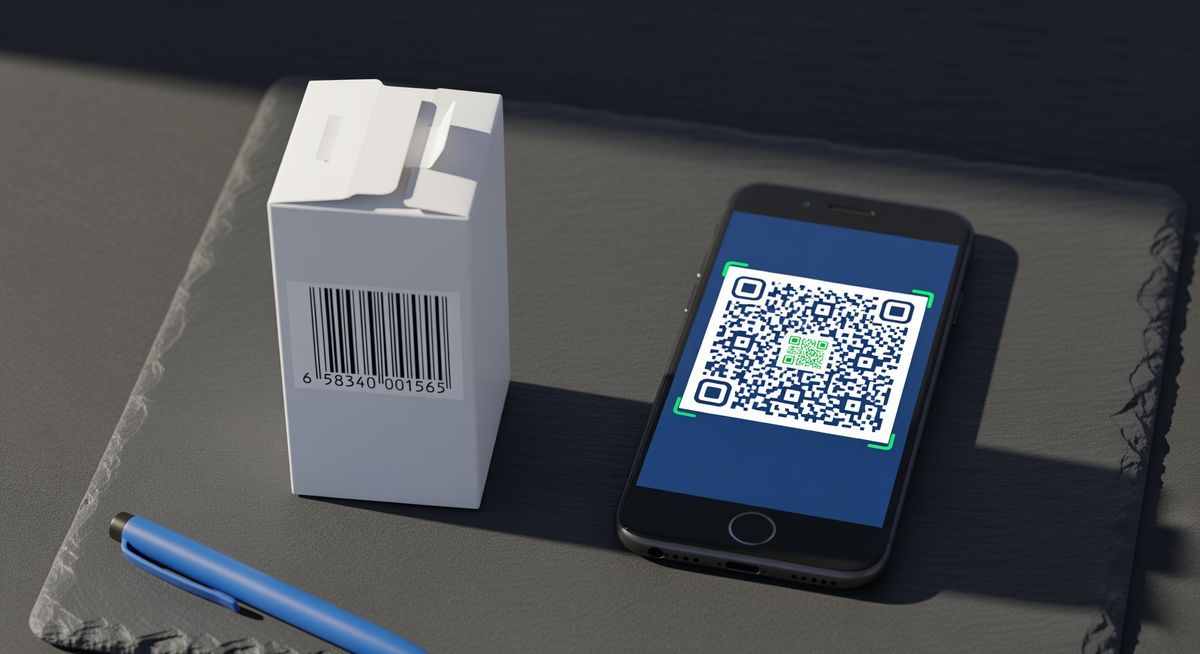
The two technologies coexist comfortably. A product might have a barcode for checkout and a QR code on the packaging that links to recipes, nutritional details, or authenticity verification. That's not competition. It's each technology doing what it does best.
Frequently Asked Questions
What is the difference between a QR code and a barcode?
A barcode is a one-dimensional pattern of vertical lines that stores a small amount of data (typically a product number up to 25 characters). A QR code is a two-dimensional grid of squares that stores up to 4,296 alphanumeric characters. QR codes can be scanned by any smartphone camera from any angle, while barcodes require a dedicated scanner or aligned camera scan. QR codes also include error correction that lets them work even when partially damaged.
Can a phone scan a barcode like a QR code?
Most smartphones can scan barcodes using the camera app or Google Lens, but the experience varies. QR code scanning is built into every modern smartphone natively. Barcode scanning often requires a specific app or Google Lens, and the phone needs to be held at the correct angle to read the horizontal lines. For consumer-facing use, QR codes are more reliably scannable.
Which is more secure, a barcode or a QR code?
Neither format is inherently secure or insecure. Both simply store data. However, QR codes support encryption and can link to secure, verified destinations. Dynamic QR codes add another layer: because they use a redirect URL, the platform managing them can monitor for misuse or disable compromised codes. Barcodes store data directly with no redirect layer, which makes them simpler but also harder to control once printed.
Can QR codes replace barcodes?
No. Barcodes and QR codes serve different purposes. Over 2 million companies use GS1 barcodes, which are scanned more than 10 billion times daily across global supply chains. The retail and logistics infrastructure built around barcodes would be enormously expensive to replace. QR codes are expanding into areas where barcodes never worked well: marketing, contactless menus, event check-ins, and mobile payments. The two technologies coexist. A product might have a barcode for checkout and a QR code on the packaging that links to recipes or authenticity verification.
What about RFID vs barcodes vs QR codes?
RFID (Radio-Frequency Identification) is a third option that uses radio waves instead of optical scanning. RFID tags don't need line-of-sight to be read, can be scanned through packaging, and multiple tags can be read simultaneously. This makes RFID strong for supply chain logistics and inventory counting. The trade-off is cost: RFID tags are significantly more expensive than printing a barcode or QR code. For most consumer-facing and marketing use cases, QR codes offer the best balance of capability, cost, and accessibility.
Written by Andy Lee, QR Technology Specialist at FreeQR. FreeQR helps people create dynamic QR codes with built-in landing pages and scan analytics. Learn more about us.